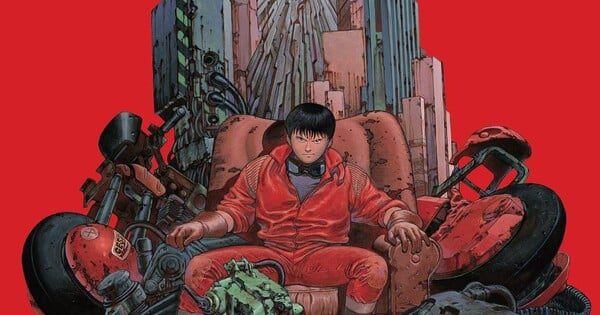
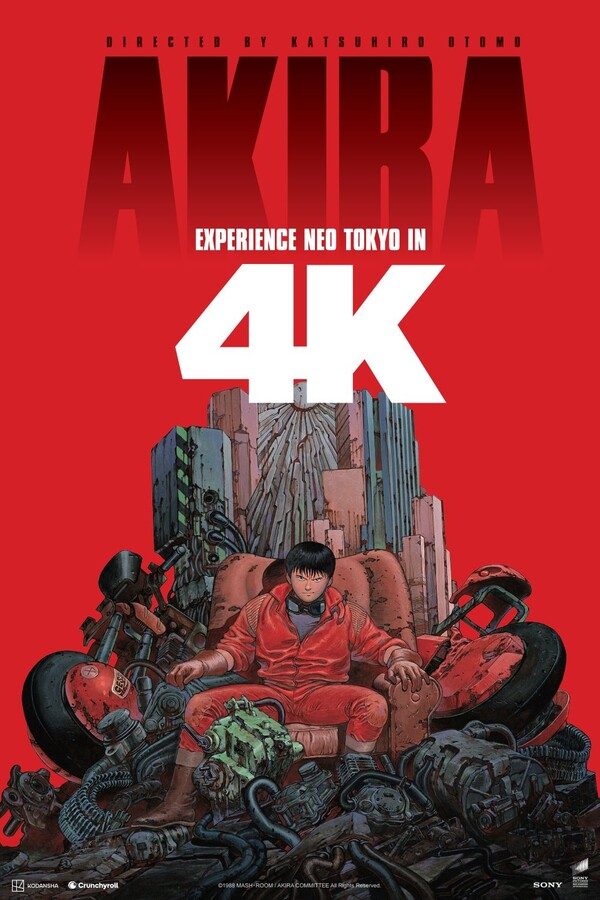
The re-release of Katsuhiro Otomo‘s Akira earned an estimated US$3,175,000 in the United States over its opening Labor Day weekend, according to Box Office Mojo — a remarkable result for a 38-year-old animated film screening in a limited theatrical window against wide new releases.
The weekend numbers
The film took US$1,220,000 on its opening Friday, US$725,000 on Saturday, US$695,000 on Sunday and an estimated US$535,000 on the Monday holiday. Crunchyroll and Sony Pictures Entertainment began screening it in select U.S. and Canadian theatres in 4K and IMAX on Friday, September 4, in both the original Japanese with English subtitles and the English dub. Anniversary and repertory screenings of Akira have reliably performed well for years, but a four-day gross above US$3 million for a decades-old catalogue title, with no new marketing hook beyond the 4K restoration, underscores how durable its theatrical draw remains.
Why a 1988 film still fills auditoriums
Akira is routinely cited as the film that broke Japanese animation into the Western mainstream. Adapted from Otomo’s own manga, it is set in a dystopian “Neo-Tokyo” rebuilt after a mysterious explosion levelled the city in 1988 and triggered World War III. The story follows Kaneda, the leader of a teenage biker gang, and his friend Tetsuo, whose latent psychic powers are violently awakened after a motorcycle crash and a military experiment — powers that spiral beyond anyone’s ability to contain them.
What made the film a landmark was less the plot than the craft. Produced on a then-record budget with a reported 160,000 animation cels, it featured fully pre-scored dialogue (rare for anime at the time), meticulous background detail, complex lighting effects, and fluid, weighty animation of vehicles and crowds. That technical ambition, combined with a bleak, adult science-fiction sensibility, gave Western audiences a version of animation they had not seen, and its influence runs through decades of film, television, comics and music videos — the neon-lit cityscapes, the red motorcycle, and the much-referenced “Akira slide” braking shot have all become visual shorthand.
Otomo’s career
Otomo began as a manga artist on works including Domu: A Child’s Dream and Kibun wa mo Senso before Akira, which ran in Kodansha’s Young Magazine from 1982 to 1990 across more than 2,000 pages. He moved into animation by directing a segment of the 1987 omnibus Robot Carnival, then adapted Akira itself while the manga was still ongoing — which is why the film’s ending diverges from the later chapters. His subsequent directorial work includes the Memories omnibus (1995), the Gundam: Mission to the Rise event short, and the long-gestating steampunk feature Steamboy (2004). He also contributed to Harmagedon, Roujin Z, Spriggan, Metropolis, Freedom Project and Hipira: The Little Vampire.
A new studio
Significantly, Otomo has founded a new feature-animation studio in Tokyo called OVAL GEAR, whose first title is currently in production. That makes the Akira re-release both a celebration of his best-known work and a reminder that the director behind anime’s most famous single film is active in features again for the first time in more than two decades. A long-discussed new Akira anime project, announced by Otomo’s Sunrise-affiliated studio years ago to adapt the full manga, has not been formally cancelled but has shown no visible progress; for now, the 4K restoration is the definitive way to see the 1988 film as intended.
Via Anime News Network. Source: Box Office Mojo.